Quilt making isn’t just a hobby; it’s a delightful journey of creativity and warmth. Picture this: colorful fabrics dancing together in a patchwork of memories, each stitch telling a story. Whether you’re a seasoned pro or a curious newbie, the world of quilting offers endless possibilities to express yourself while crafting cozy masterpieces.
But let’s be honest—who wouldn’t want to snuggle under a quilt they made themselves? It’s like wearing a warm hug! From choosing the perfect fabrics to mastering intricate patterns, quilt making combines artistry with a sprinkle of patience (and maybe a few cups of coffee). Dive into this vibrant craft and discover not just a pastime, but a community where laughter, creativity, and a little bit of chaos come together to create something truly special.
Overview of Quilt Making
Quilt making combines art and craft, allowing for personal expression through fabric and stitching. This age-old practice includes several key steps: selecting fabric, designing patterns, cutting pieces, sewing them together, and adding batting and backing. Each phase reflects individual creativity, which results in unique quilts.
Selecting fabric involves choosing colors and textures that complement each other. Popular choices include cotton, flannel, and batik, each offering distinct qualities. Patterns also play an essential role in quilt making. Quilters often use traditional patterns like Log Cabin or Flying Geese, or they might innovate by creating custom designs.
Cutting pieces requires precision. Quilters utilize rotary cutters and rulers to ensure accuracy. Attention to detail during this phase influences the final appearance of the quilt. After cutting, the sewing process begins. Quilters assemble the fabric pieces, employing straight seams for a clean finish.
Adding batting contributes warmth and structure. Batting material varies, including cotton, polyester, or wool, chosen based on desired weight and feel. Finishing touches include the backing fabric, which is often a solid color or a coordinating print for visual interest.
Quilt making fosters a sense of community. Local quilt guilds and online forums offer quilters opportunities to connect, share tips, and showcase their work. This collaborative spirit enriches the experience, making quilt making not just a solitary endeavor, but a shared passion. Quilting events and workshops encourage skill development and inspire creativity.
The combination of techniques and communal engagement creates a fulfilling craft experience. Participants find joy in both the process and the finished product, leading to a deeper appreciation of this time-honored tradition.
History of Quilt Making
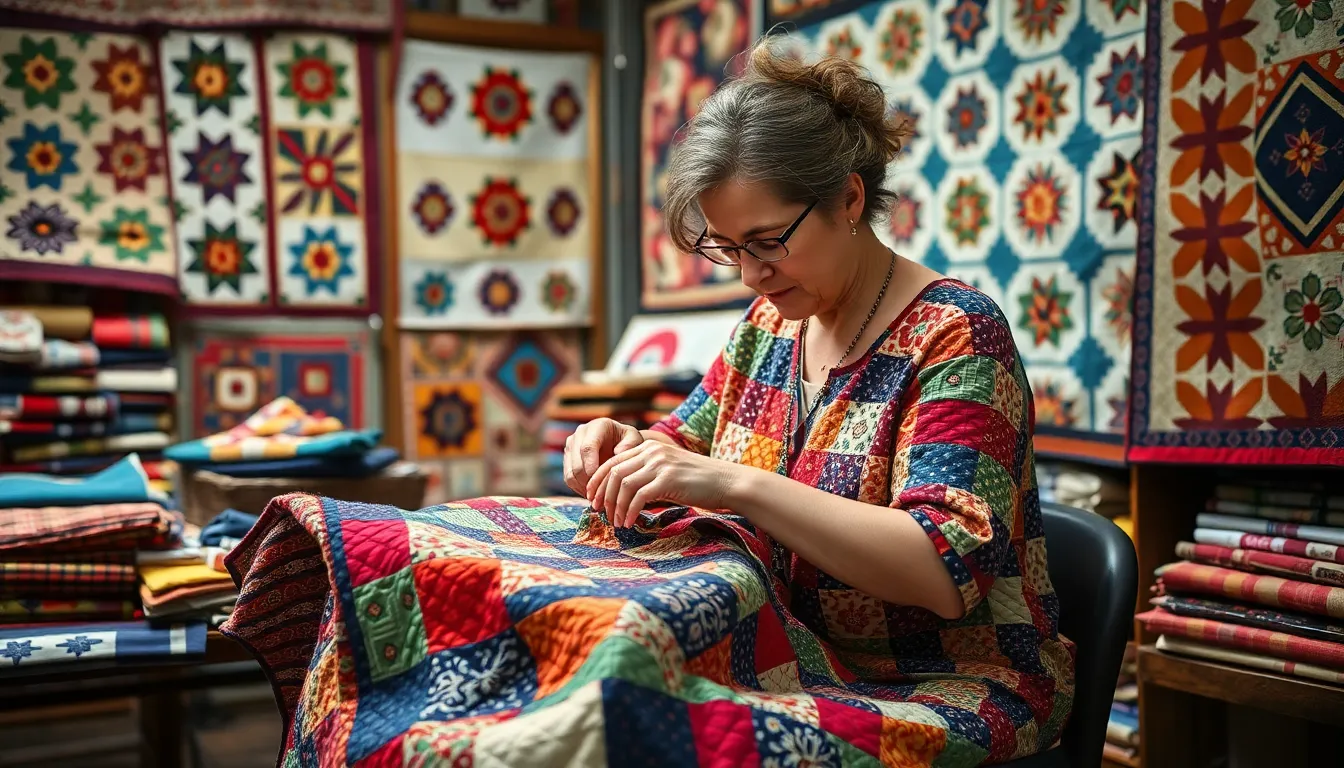
Quilt making possesses a rich history that spans centuries, intertwining cultural practices with practical needs. This art form reflects creativity and tradition across different societies.
Ancient Techniques
Ancient quilt-making techniques emerged in various regions. Egypt produced quilts as early as 500 AD, where layered fabrics offered warmth. In China, artisans developed intricate quilting methods, showcasing exquisite designs. Techniques varied across cultures, often using local materials to create functional and decorative items. Craftsmanship intertwined with storytelling, as quilts symbolized heritage and identity.
Evolution Through Eras
The evolution of quilt making gained momentum during the Middle Ages. European artisans introduced patchwork designs that enhanced functionality and artistry. By the 18th century, American settlers adopted these techniques, blending cultural influences to create distinctive styles. The Industrial Revolution brought machine sewing into play, transforming production processes. Modern quilters embraced diverse fabrics and innovative patterns, continually pushing artistic boundaries while honoring traditional methods.
Materials Used in Quilt Making
The choice of materials in quilt making significantly impacts the final product. He or she selects fabrics, tools, and equipment that enhance the quilt’s overall design and functionality.
Fabrics and Textiles
Cotton remains the most popular fabric choice, prized for its durability and ease of washing. Quilters often favor blends that combine cotton with other fibers for added texture. Additionally, flannel offers warmth, making it perfect for cozy quilts. Silk and linen, while luxurious, require special handling due to their delicate nature. Sourcing fabrics from local stores or online shops provides variety, allowing quilters to express their individual styles through patterns and colors.
Tools and Equipment
Essential tools include rotary cutters, mats, and rulers, which facilitate precise cutting. A quality sewing machine speeds up the sewing process while ensuring consistent stitching. Ironing boards and irons play a crucial role in pressing seams flat, contributing to a polished finish. Safety pins or clips often secure layers together before sewing, minimizing movement during the process. Having specialized quilting needles also enhances the sewing experience, ensuring that the fabric layers are handled with care.
Techniques in Quilt Making
Quilt making involves various techniques that enhance creativity and efficiency in the craft. Understanding these techniques can significantly improve the final product.
Hand Quilting vs. Machine Quilting
Hand quilting offers a traditional approach. Artisans often prefer it for the personal touch and intricate detail. Quilters find satisfaction in each stitch, reflecting their unique style. Conversely, machine quilting saves time and enables the creation of complex patterns. Many choose machines for the consistency and speed they provide. Selecting between these methods often depends on personal preference and the desired quilt outcome.
Stitching Methods
Several stitching methods exist, each contributing distinct qualities to quilts. Straight stitching remains the most common, providing a clean look. Another popular technique, free-motion stitching, allows greater creativity and artistic expression. Quilters might also use decorative stitches to enhance visual appeal. Everyone benefits from experimenting with various methods to discover their favorite style. Combining techniques can yield unique designs, making the quilt-making process even more enjoyable.
Quilt Making Patterns and Designs
Quilt making involves a wide variety of patterns and designs that can inspire creativity and personal expression. Quilters often choose between traditional methods and modern innovations, each offering unique aesthetics and techniques.
Traditional Patterns
Classic designs hold a significant place in quilt making. Patterns such as Grandmother’s Flower Garden, Log Cabin, and Lone Star have stood the test of time, showcasing intricate geometrical shapes and symmetrical layouts. Many quilters favor these patterns for their historical value and rich storytelling capabilities. Traditional quilts often use repeated motifs, allowing for variation while maintaining a cohesive look. The hand-stitched finishes on these patterns often reflect meticulous care, adding character to each piece. Quilting communities frequently celebrate these designs through workshops and guilds, ensuring these beloved techniques endure through generations.
Modern Innovations
The landscape of quilt making has seen remarkable evolution in recent years. Modern quilters embrace bold colors, asymmetrical designs, and innovative materials. Techniques such as improv quilting and contemporary patterns create a fresh perspective on this age-old craft. Digital fabric printing allows for unique, custom designs that capture individual stories. Furthermore, modern technology enhances efficiency, offering access to patterns and tutorials online. Many quilters incorporate non-traditional elements, like mixed media and unexpected textures, into their work. This flexibility reflects an adventurous spirit, encouraging quilters to explore their creativity without boundaries.
Conclusion
Quilt making stands as a beautiful blend of artistry and practicality. It invites individuals to express their creativity while connecting with a rich history and vibrant community. Each quilt crafted carries a personal story and serves as a testament to the dedication and skill involved in the process.
As quilters continue to innovate with materials and techniques, the craft remains alive and relevant. Whether through traditional patterns or modern designs, quilt making fosters a sense of belonging and shared joy. Embracing this art form not only enhances personal creativity but also strengthens bonds within communities.